


‘Folly praises herself endlessly arguing that life would be dull and distasteful without her” Erasmus – ‘In Praise of Folly’ (Translation by John Wilson)
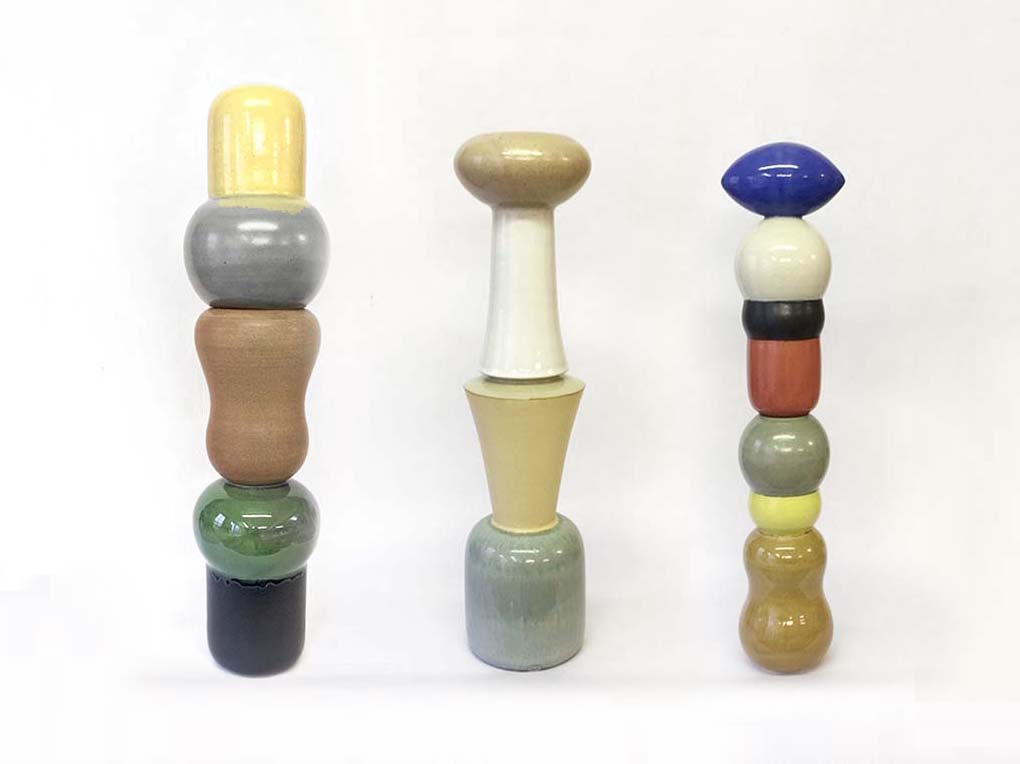
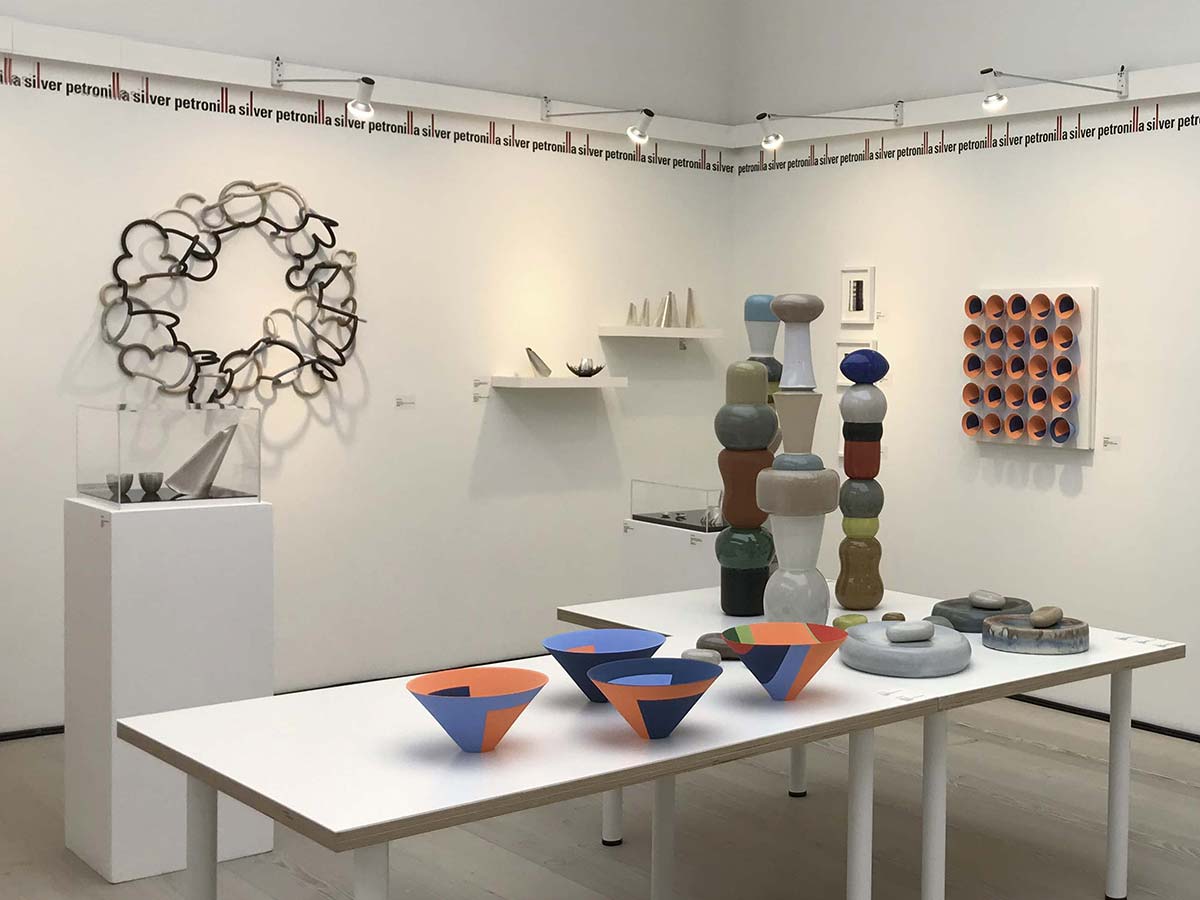
But of course the tabletop Follies are also a precarious proposition – a fragile equilibrium, labour intensive, aspirational in their reach but uncertain as to their purpose (structure or vessel?). This alludes both to the position of craft in contemporary culture and the politics/condition of the domestic sphere. Hob, Lares and Nis are names of various mythological, European, household spirits to which it was necessary to pay attention for protection and order.
(Hob – is from Anglo Scottish boarder folklore, a sprite that inhabitants the boundaries between inside and outside the home. Lares – were ancient Roman guardians of the hearth, boundaries and fruitfulness. Nis – is a mythological creature from Nordic folklore associated especially with the winter solstice and household celebrations.)
The Folly Odo & Rap makes particular references to the pounding stick and block central to the arduous domestic life of women in many sustainable societies around the world. (Odo is the Igbo word (from Nigeria) for the pounding block; Rap refers to the pounding stick which has also, contemporainsely, morphed into a musical instrument!). The 2 part Odo & Rap appears to cross boundaries between the functional and the made object but, as with the grinding blocks – which are inspired by both the beautiful archaeological grinding stones that fill the museums and those still in use today – the tactic anxiety to handle and enact is laden with confusion.
In all the ‘Folly’ series, the structures are made up of an accumulation of discarded pots that were thrown during the process of producing my tableware ranges but later rejected for various reasons. The recycling of these parts into a non-designed tower of glazed pots replicates the amassing of a households (or studios!) domestic ware, stacked up for storage in diminishing space. The result is a tower of arbitrary profile more akin to the act of jotting or sketching imagined shapes.
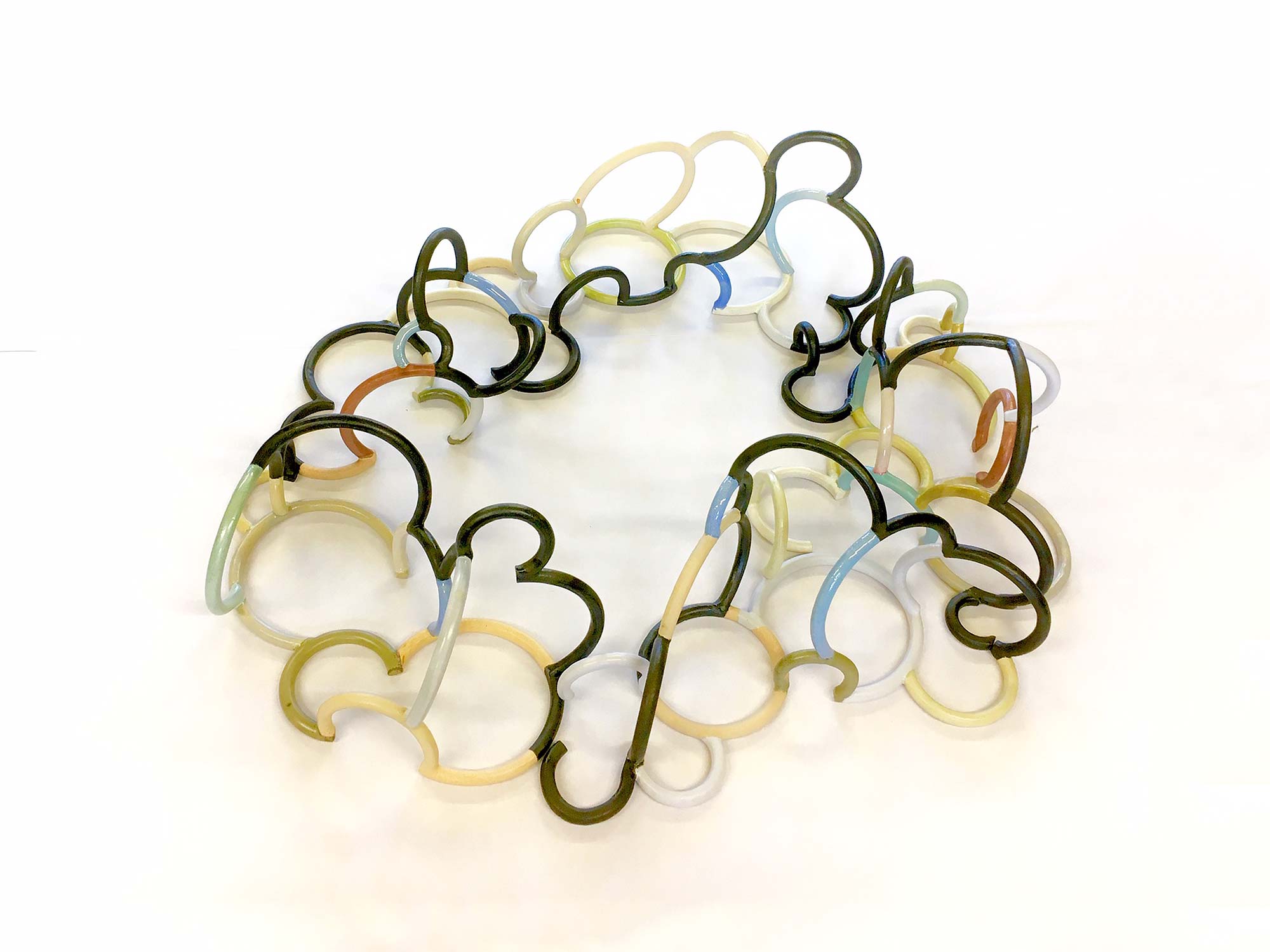
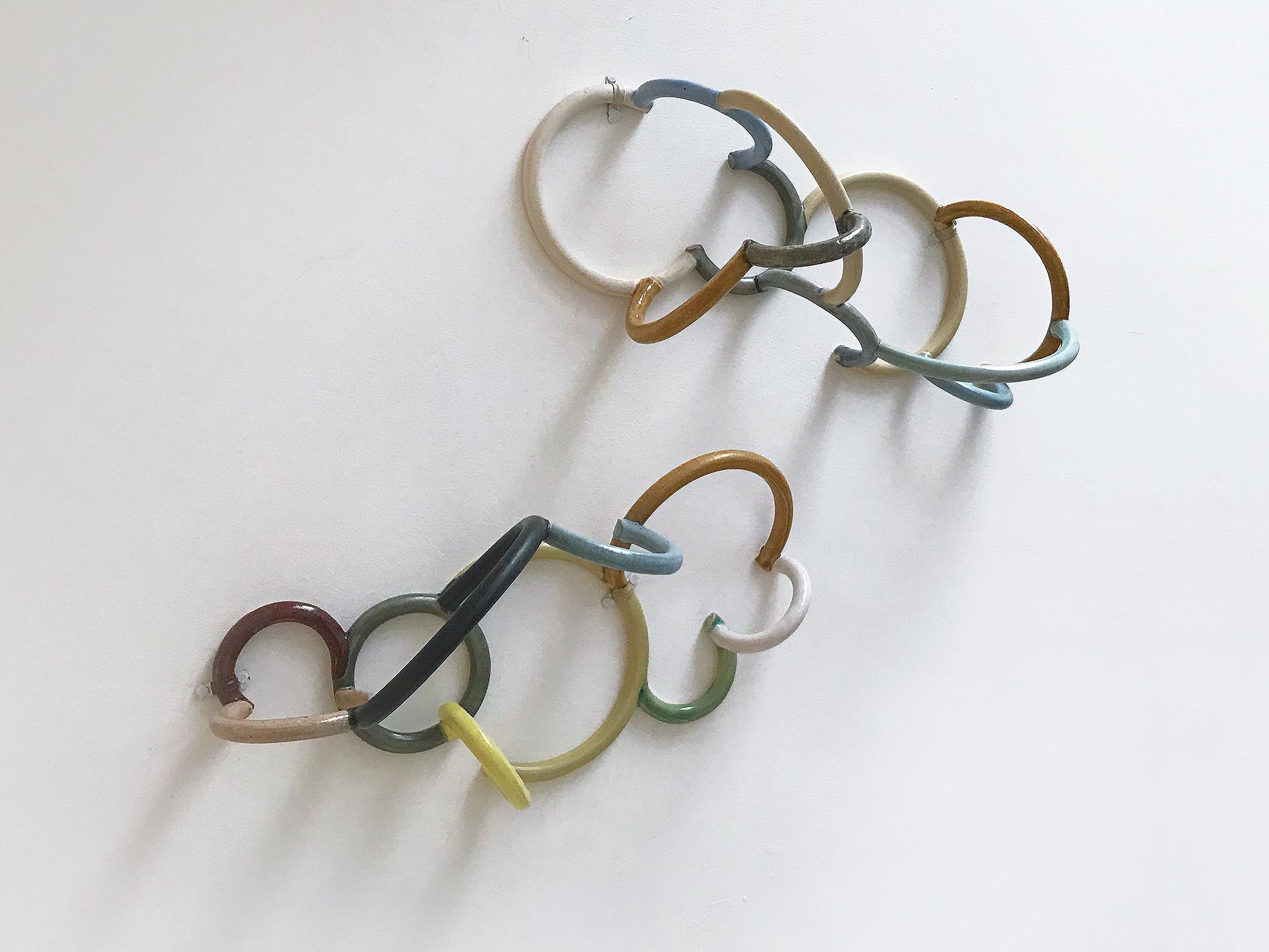
In the wall piece Doodling, the sketching is stretched to three dimensions. Thin lines of extruded paperclay loop in and out of each other tracing a series of movements in space. The path of the black glazed arcs becomes not so much a drawing as the profile of a meandering, circular line, intended but uncertain of its path.